By the end of 2024, foreign direct investment into Denmark was around 1,081 billion DKK, with the USA as the largest investor. This steady inflow of international capital has made Denmark a key location in the Nordics for special purpose vehicles SPVs, particularly for complex transactions such as structured finance, private equity, securitisation, and project financing. However, the strict AML and regulatory environment in Denmark makes onboarding with local banks challenging, meaning SPVs often require specialised banking arrangements. For international investors, family offices, and multinational groups, specialist providers like Banq Global can play an important role in opening SPV bank account in Denmark by working directly with partner banks and payment institutions.
This guide provides a detailed overview of SPV bank account options in Denmark, covering legal structures, regulatory requirements, onboarding procedures, banking partners, cash management, cross-border transactions, and best practices to help foreign investors achieve successful onboarding.
What is an SPV in Denmark?
A Special Purpose Vehicle (SPV) in Denmark is a separate legal entity which is set up for a specific investment or project. It helps protect your main assets by isolating financial risk.
For example, if a family office or private investment vehicle wants to invest in a Danish real estate project, they can set up an SPV to hold the property, manage contracts, and handle financing. Any risk or liability remains within the SPV, keeping other assets protected.
What Does SPV Banking Mean in Denmark?
SPV banking in Denmark involves opening and managing bank accounts for Special Purpose Vehicles SPVs. These SPV bank accounts help SPVs to handle financing, contracts, and transactions while keeping liabilities separate from the parent company or investors.
As structured finance transactions are usually carried out through SPVs, banks apply strict compliance checks to ensure all regulatory rules are met and transactions remain transparent and secure. These checks make sure the SPV bank account in Denmark is used legally and transparently.
What is the Regulatory Framework Working Behind SPV Bank Accounts in Denmark?
In Denmark, there are no standalone securitisation laws defining how assets can be pooled, transferred to SPVs, and sold to investors. However, for banks specifically, Denmark has introduced a limited securitisation regime under Sections 152i–152y of the Danish Financial Business Act.
Under this framework, banks can establish “refinancing registers” to securitise parts of their own loan portfolios. But banks must first obtain approval from the Danish Financial Supervisory Authority (FSA) which oversees regulated financial activities.
In practice, banks can transfer selected assets to an SPV through a receivables purchase agreement. The SPV then issues asset-backed securities which work in a similar way to a classical securitisation structure. However, there is one key difference.
The transfer of assets is legally completed by recording them in the refinancing register and there is no need to notify individual debtors of the transfer.
AML, KYC and Disclosure Requirements For SPV Bank Account in Denmark
Danish banks place a strong emphasis on KYC and AML checks to verify the identity of all relevant parties and the source of funds used in SPV structure. These disclosure requirements become more pronounced, especially when SPVs operate across multiple jurisdictions or handle cross border transactions. In such cases, enhanced due diligence becomes mandatory, involving disclosure of counterparties, asset classes, and transaction flows.
SPVs must also adhere to data protection regulations when processing personal data related to financial assets or investors. This includes ensuring that data subjects’ rights are respected in order to comply with General Data Protection Regulation (GDPR) as supplemented by the Danish Data Protection Act (Databeskyttelsesloven). Moreover, if an SPV's main business activities involve large-scale processing of sensitive data or systematic monitoring (e.g., high-risk financial profiling), it must appoint a Data Protection Officer (DPO).
Legal Structures Used for Danish SPVs
The most common legal structures used for SPVs in Denmark are the ApS (private limited liability company) and the A/S (public limited company). However, businesses typically prefer the ApS for SPV setups due to its lower minimum share capital requirement of DKK 40,000 and its relatively simple governance framework.
In contrast, an A/S requires a minimum share capital of DKK 400,000 and is more commonly used in larger or more complex projects where access to capital markets or credit rating agencies is relevant.
It is also important to note that Danish law permits 100% foreign ownership, meaning that foreign investors can fully own a Danish Holding Company, and there is no requirement for managers, CEOs, or board members to be Danish residents. This makes Denmark an attractive location for foreign-owned entities, including non-resident directors and shareholders to open a SPV account.
Onboarding Requirements For SPV Bank Account in Denmark
Opening a Danish SPV bank account involves a detailed onboarding process. Banks require clear documentation and a simple explanation of what the SPV will do. The bank will ask about the following documents:
- Incorporation documents and articles of association (to meet registration requirements)
- CVR registration details from the Danish Business Authority
- Beneficial ownership disclosures (to meet disclosure requirements)
- ID documents for directors and UBOs (for KYC and data subject checks)
- A business plan explaining the SPV’s purpose and activity
- Financial position, expected cash flows, and basic financial statements (e.g. balance sheet)
Banks may also ask for a few additional documents, such as:
- Board resolutions confirming approval to open the account
- Records showing funding sources, any asset transfers, and how transactions are structured
- Information needed for tax reporting and financial reporting
- Proof of statutory filings, especially if the SPV is already active
Clear documentation of SPV’s core business, purpose and funding structure helps banks in understanding the SPV setup, assess risk exposure, and ensure full regulatory compliance.
Banking Partners and SPV Bank Account Structures in Denmark
SPVs in Denmark can access a range of banking solutions which depend on their structure, financial position, and legal risks.
Traditional Banks
Traditional Danish banks such as Nordea and Danske Bank are often considered for SPV banking. However, these institutions typically impose strict onboarding requirements. They may also be selective in accepting SPV clients, particularly those involved in complex or high-risk transactions.
Fintech Providers
Fintech providers, including Revolut and other payment institutions, offer alternative solutions for cash management and payment processing. Although their suitability depends on the regulatory classification of the SPV and the nature of its activities.
Specialist Providers
Specialist corporate service providers and banking intermediaries play an increasingly important role in this space by offering administration services. Banq Global, for example, operates a partner-led model that helps SPVs access suitable banking infrastructure and prepare compliance documentation.
How Does Transaction Banking and Cash Management Work for SPVs?
Special Purpose Vehicles (SPVs) rely on transaction banking to manage their day-to-day operations safely and keep cross border transactions separate from the parent company.
- To support flexible payment workflows, multicurrency accounts are essential.
- To reduce risk, strong governance controls, such as dual-signature approvals and transaction limits, are key.
- To provide transparency in cash flows, audit trails and regular monitoring are crucial.
An intelligent choice of corporate service provider or financial institution can help meet SPV needs by offering secure transaction banking to manage operations safely and efficiently.
How Do Cross-Border Payments and FX Management Work for an SPV bank Account in Denmark?
Cross-border payments and foreign exchange (FX) management for a Special Purpose Vehicle (SPV) bank account in Denmark are designed to facilitate multi-currency transactions. These international transactions work under the strict regulatory framework of the Danish Financial Supervisory Authority (Finanstilsynet) and EU regulations.
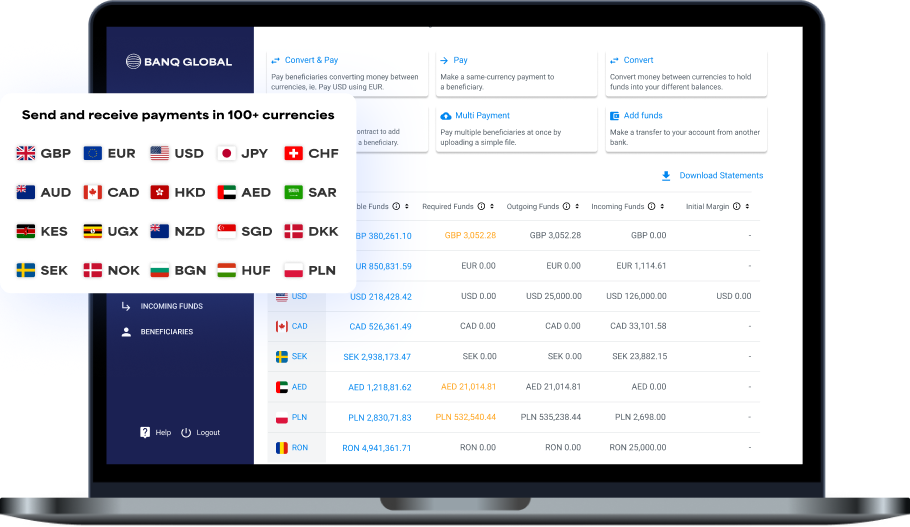
SPVs typically use online platforms to manage international collections and payouts, where multicurrency accounts provide the backbone for cross-border transactions. Similarly, foreign exchange (FX) tools cannot be ignored which can help in managing currency risk.
FX risk management is especially important for SPV accounts which are involved in project financing or private equity investments. Because in these cases protecting investment returns and maintaining stable cash flow is even more critical. When transactions involve non-EU counterparties, correspondent banking relationships are also mandatory to ensure smooth international clearing.
Ongoing Tax Reporting and Compliance
After opening an SPV bank account in Denmark, all tax reporting and other filings are managed via the Danish Tax Agency e‑tax portal.
- SPVs in Denmark must pay a corporate tax of 22%.
- They are required to submit annual financial statements and complete all statutory filings.
- Depending on the structure of their transactions, SPVs may also face withholding tax or VAT obligations.
- SPVs that are VAT-registered must follow Denmark’s digital accounting rules for reporting and record-keeping.
With proper planning, SPVs can stay fully compliant while making the most of available tax incentives in Denmark.
SPV Banking Best Practices
Early preparation is essential. Delays in onboarding can significantly impact transaction timelines, particularly in complex projects involving multiple jurisdictions and shareholders. Following best practices can help reduce onboarding time but also help in achieving better tax efficiency.
- Maintaining clear and transparent ownership structures
- Preparing comprehensive documentation to support onboarding
- Using segregated accounts to enhance creditor protection
- Implementing strong governance controls and oversight mechanisms
- Conducting periodic compliance reviews to ensure ongoing alignment with regulatory requirements
- Use credit enhancement methods
- By working with experienced partners, SPVs can handle the Danish banking system more easily.